
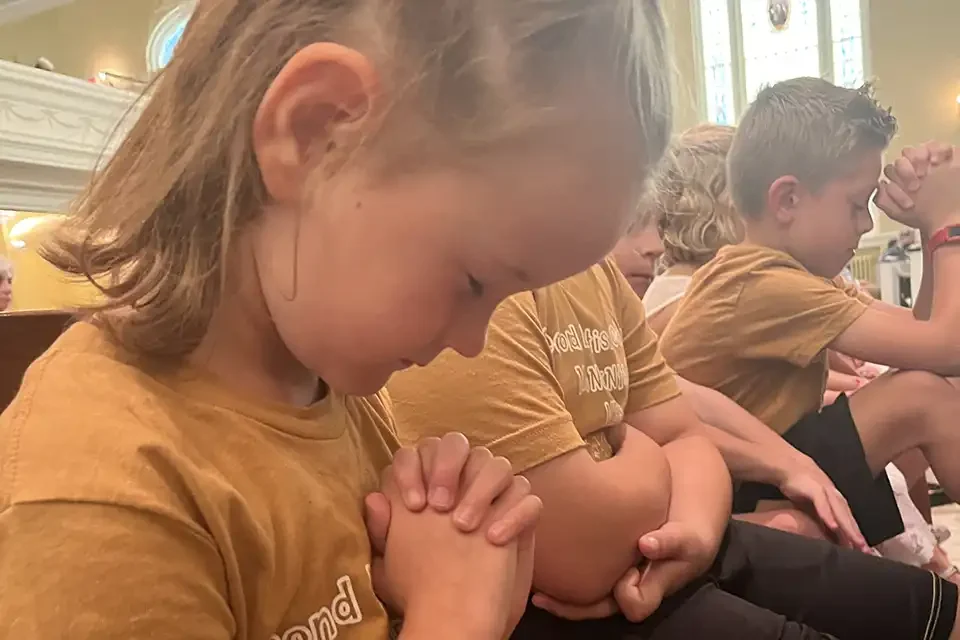
“Now I lay me down to sleep…”
“God is great, God is good…”
“Thank you for the world so sweet…”
“Oh, the Lord is good to me…”
“Come, Lord Jesus, be our guest…”
Prayers like these that are part of a regular routine become rote. Then there are borrowed prayers – words someone else has written or spoken that resonate deeply with us. Still other prayers are spontaneous as we string together thoughts and words ad lib.
Are certain styles “better” than others? Of course not. We can pray with thoughts and feelings that are memorized, borrowed, or spontaneous – just as we can pray with our eyes open or closed, while moving or still, through speaking, thinking, writing, weeping, admiring, singing, sighing, etc. Some styles of prayer will mean more to us in different situations or seasons of life, and ALL of them are good.
Practicing prayer isn’t about praying a certain way or making sure God knows what’s on our mind. (God already does.) It’s about changing US. It reminds us that we are not alone, that we aren’t the center of our own story, and that the Spirit is at work in us.
Over time, let’s keep talking with kids about why, when, and how we pray and perhaps what styles we find more comfortable or meaningful in different situations. We can describe when prayer has been helpful or even boring but why we keep praying anyway. We can show how a borrowed prayer (even the Lord’s Prayer) can become rote but still be meaningful.
Here are a few ways to explain how different styles of prayer can help us and strengthen our connection with God:
- Rote prayers can regulate our nervous system like any other comfortable habit. Although they’re repetitive, they force us to pause from our own agenda to connect with God and perhaps foster gratitude. Like a memorized Bible verse, a rote prayer can emerge in a meaningful way when no other words come to mind.
- Borrowed prayers can also ground us by clarifying our jumbled thoughts and emotions. They draw us closer to Jesus through powerful or deeply nuanced thoughts – especially in seasons of grief, exhaustion, or confusion when words are hard to find.
- Spontaneous prayers help us express exactly what’s on our minds. These prayers draw us to empathize with specific people in our lives and recognize how we can be Jesus’ hands and feet to them.
All prayer matters, because it connects us with God. May we keep practicing throughout our daily lives – alone and together – in whatever ways foster that connection.